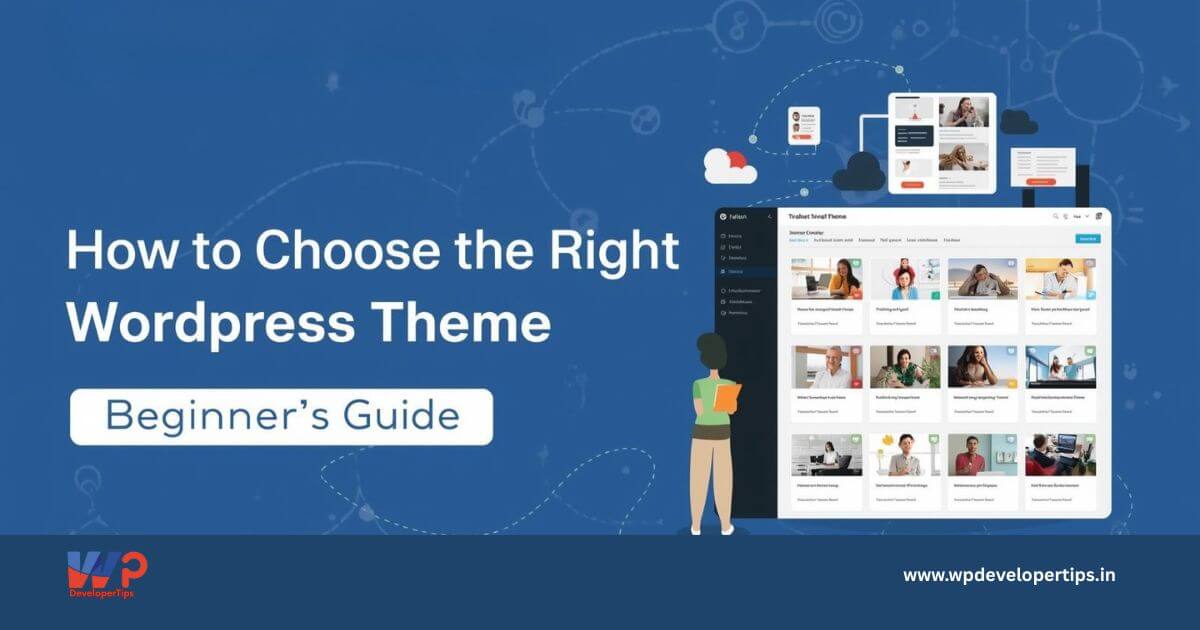
Choosing the right WordPress theme is one of the most important steps when building a website. A theme not only controls how your site looks but also affects performance, user experience, SEO, and future scalability.
For beginners, thousands of free and premium themes can feel overwhelming. In this guide, we’ll break everything down in simple terms and help you choose the perfect WordPress theme for your website—without confusion.
What Is a WordPress Theme?
A WordPress theme is a collection of files (templates, stylesheets, and scripts) that determine the layout, design, and appearance of your website.
- Website layout
- Colors and fonts
- Header, footer, and sidebar structure
- Blog and page styles
- Basic responsiveness
Important: A theme controls design, not core functionality. Features should ideally come from plugins, not themes.
Step 1: Understand Your Website’s Purpose
Before choosing a theme, be clear about what kind of website you are building.
- Is it a blog or personal website?
- A business or company website?
- An e-commerce store (WooCommerce)?
- A portfolio or agency site?
- A news or magazine website?
Example:
Blogs work best with clean, content-focused themes, while business websites need professional layouts with clear call-to-action sections.
Step 2: Keep It Simple and Clean
Many beginners make the mistake of choosing themes with too many animations, fancy sliders, and heavy demo content.
Such themes often:
- Load slowly
- Confuse visitors
- Are difficult to customize
Best Practice: Choose a simple, clean, and minimal theme. You can always add features later using plugins.
Popular minimalist themes include Astra, GeneratePress, Kadence, and Neve.
Step 3: Check Responsiveness (Mobile-Friendly)
More than 60% of website traffic comes from mobile devices. Your theme must look good on mobile phones, tablets, and desktops.
- Resize your browser window
- Check the theme demo on mobile
- Look for “Responsive” or “Mobile-Friendly” labels
Google also prioritizes mobile-friendly websites in search rankings.
Step 4: Focus on Speed and Performance
A slow website results in poor user experience, lower Google rankings, and higher bounce rates.
- Avoid themes with too many built-in features
- Avoid heavy sliders and animations
- Prefer lightweight themes
Lightweight themes improve page load speed, Core Web Vitals, and overall SEO.
Step 5: Page Builder Compatibility
If you plan to use page builders like Elementor, Gutenberg (Block Editor), WPBakery, or Bricks, ensure your theme is compatible.
- Support for Gutenberg and Elementor
- Full-width and container layout options
Avoid themes that lock you into a specific page builder unless necessary.
Step 6: Customization Options
A good theme should allow easy customization without writing code.
- WordPress Customizer support
- Global color and typography settings
- Header and footer customization
- Layout and sidebar controls
If everything requires custom CSS or PHP, the theme is not beginner-friendly.
Step 7: Plugin Compatibility
Your theme should work well with essential WordPress plugins such as:
- SEO plugins (Rank Math, Yoast)
- Caching and performance plugins
- Security plugins
- WooCommerce (if required)
- Contact form plugins
Step 8: SEO-Friendly Theme Structure
An SEO-friendly theme uses proper heading hierarchy, clean HTML markup, fast loading assets, and supports schema where possible.
Remember: SEO plugins help, but a poorly coded theme can still hurt your rankings.
Step 9: Free vs Premium Themes
Free Themes
- Good for beginners
- Available in WordPress.org
- Secure and reviewed
Premium Themes
- Advanced customization
- Better support
- More design flexibility
Recommendation: Start with a high-quality free theme and upgrade only if needed.
Step 10: Check Reviews, Ratings & Updates
Before finalizing a theme, always check:
- User ratings and reviews
- Last update date
- WordPress version compatibility
- Developer support activity
Common Mistakes to Avoid
- Choosing themes based only on demo design
- Selecting feature-heavy themes
- Ignoring mobile responsiveness
- Using outdated or unsupported themes
- Relying on themes for core functionality
Recommended Beginner-Friendly WordPress Themes
- Astra
- GeneratePress
- Kadence
- Neve
- Hello Elementor
Final Thoughts
Choosing the right WordPress theme doesn’t have to be complicated. Focus on simplicity, speed, responsiveness, customization, and long-term usability.
A good theme should support your content, not overpower it.
Start simple—your website can always grow and evolve later.